
 Expertise Since 1987
 Rated Excellent
 FLEXIBLE PRICING
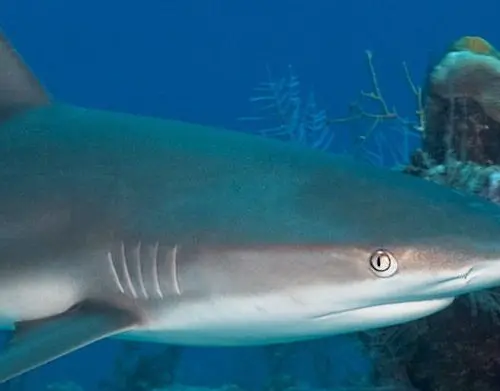
Many of the dive sites we visit lie outside the Princess Alexandra National Park, making responsible liveaboard operations especially important. Through our Dive Green sustainability strategy and participation in Turks & Caicos Reef Fund surveys, we support ongoing efforts to monitor and protect the reefs explored on these itineraries.
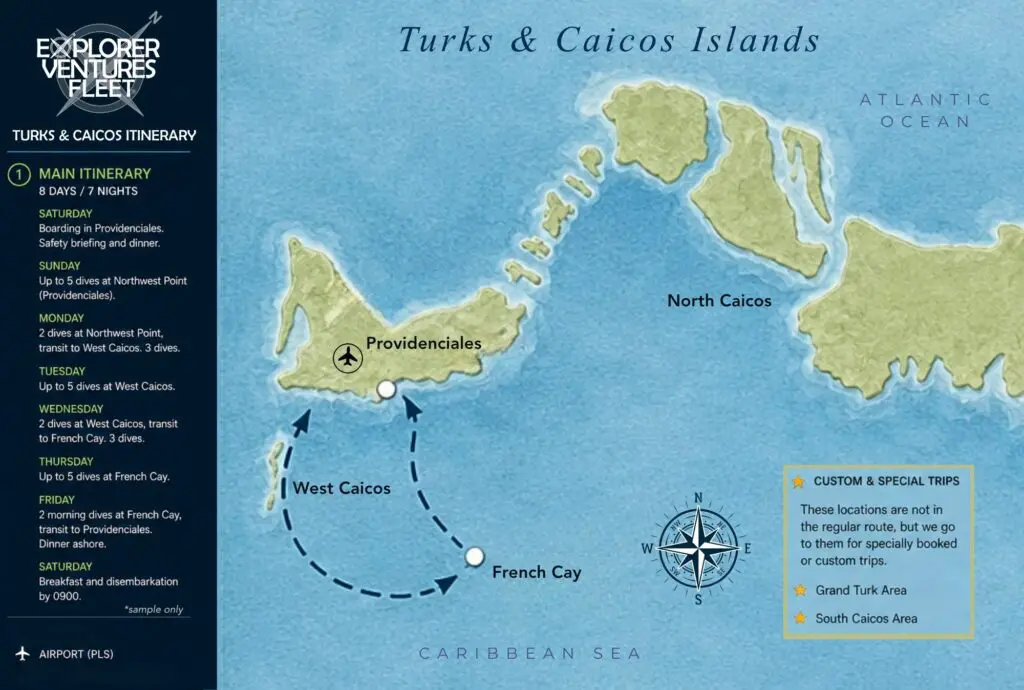
*French Cay and West Sand Spit are visited weather permitting. Grand Turk and South Caicos are available on select specialty itineraries only.
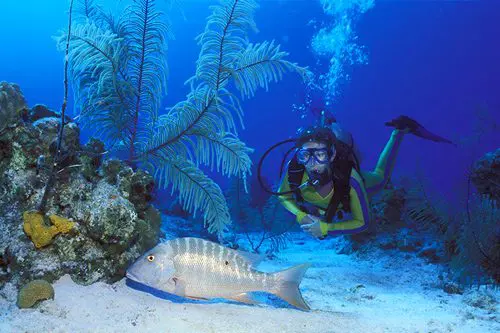
Why Dive the Turks & Caicos by Liveaboard?
The best Turks & Caicos diving is spread across multiple regions rather than concentrated on a single reef system. A liveaboard lets you move between Northwest Point, West Caicos, French Cay, and other sites during one trip, creating a broader and more varied dive week.
Aboard Turks & Caicos Explorer II, the crew selects sites based on weather, sea conditions, and dive quality, giving guests access to the strongest conditions available each day. The result is a more complete experience of the islands’ walls, reefs, marine life, and underwater terrain.
Signature Dive Sites of the Turks & Caicos
Each signature site below highlights a different strength of Turks & Caicos diving, from shark-focused walls and swim-throughs to reef structure, sponge gardens, and remote pelagic encounters.
Northwest Point Dive Sites
Northwest Point is defined by vertical walls that begin around 40–50 feet before dropping into the Atlantic. Its scale, visibility, and dense reef life make it a core region for classic Turks & Caicos wall diving.
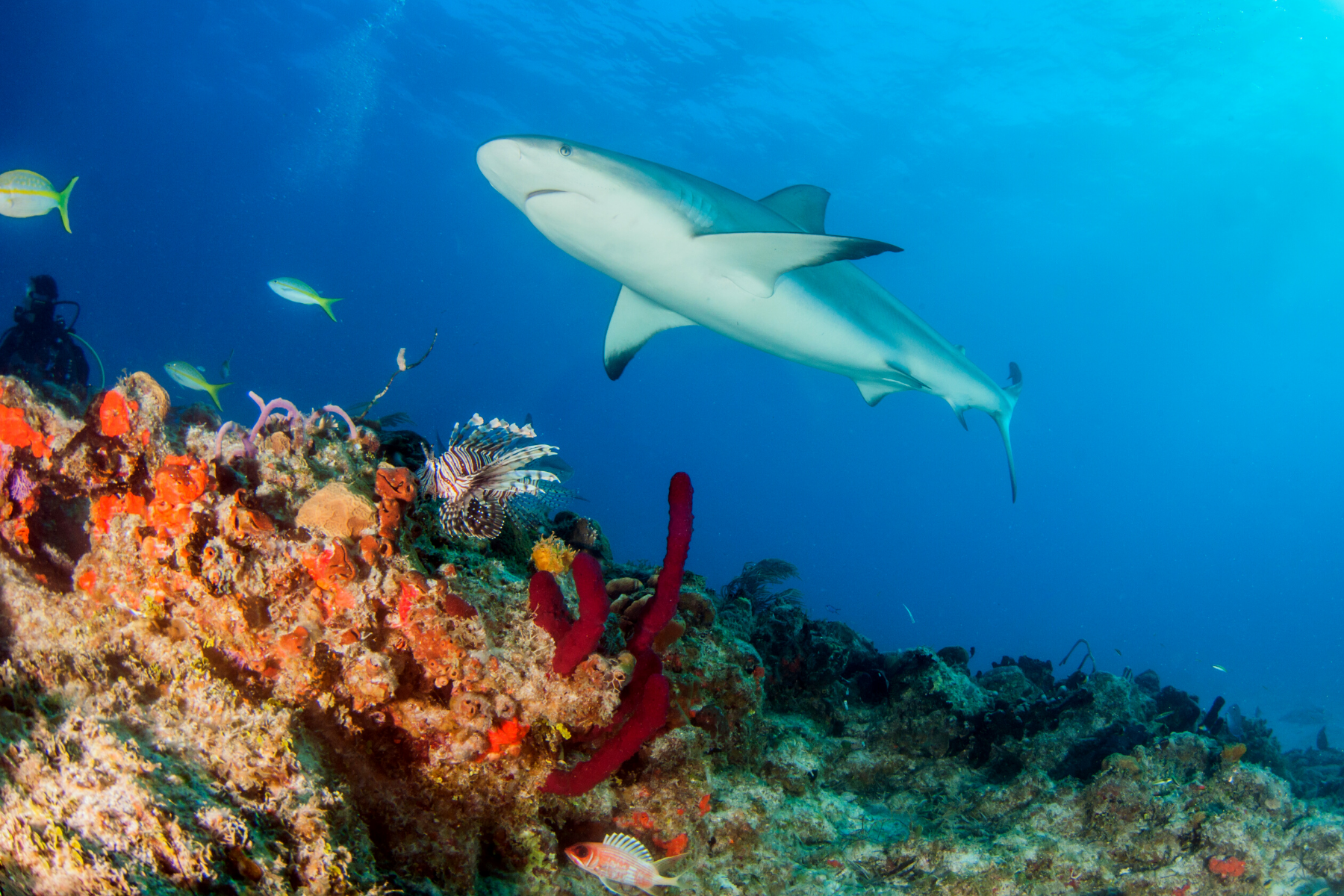
Shark Hotel – A signature Northwest Point dive, Shark Hotel pairs a steep wall with pillar corals, schooling grunts and snappers, and frequent Caribbean reef sharks, delivering the high-energy wall experience many guests come for.
Amphitheater – Named for its curved wall formation, Amphitheater offers undercuts, elephant ear sponges, black coral, and horse-eye jacks in one of Northwest Point’s most scenic settings.
The Crack – A narrow crevice slices through the reef wall, creating an exciting swim-through surrounded by giant groupers, black coral, deep-water gorgonians, and frequent eagle ray or shark sightings.
Hole in the Wall – One of the Turks & Caicos’ most iconic swim-throughs, Hole in the Wall begins as a narrow chimney before opening dramatically onto the vertical wall below. It’s an unforgettable transition from reef to open ocean, surrounded by colorful corals and sponges and the endless blue beyond.
Eel Garden – Just before reaching the wall, hundreds of garden eels sway from the sandy seabed. Combined with the nearby vertical wall, it’s a wonderful mix of macro life and dramatic topography.
The Dome – Originally sunk as the set for a French television game show, The Dome has become one of the Turks & Caicos’ most unusual dive sites. Decades underwater have transformed the structure into a thriving artificial reef where octopus, lobster, juvenile reef fish, and colorful sponges now call home. It’s a favorite for night dives and offers a completely different experience from the region’s famous wall dives.
West Caicos Dive Sites
West Caicos combines walls, sand chutes, swim-throughs, and regular encounters with reef sharks, turtles, stingrays, and schooling fish. Its distance from the busier island areas makes it a highlight of many liveaboard weeks.
Driveway – Driveway showcases everything that makes West Caicos special. A broad sand chute leads divers toward a spectacular sponge-covered wall where giant barrel sponges, reef sharks, and schools of reef fish create one of the area’s most diverse dives. It’s equally rewarding for wide-angle photographers and marine life enthusiasts.
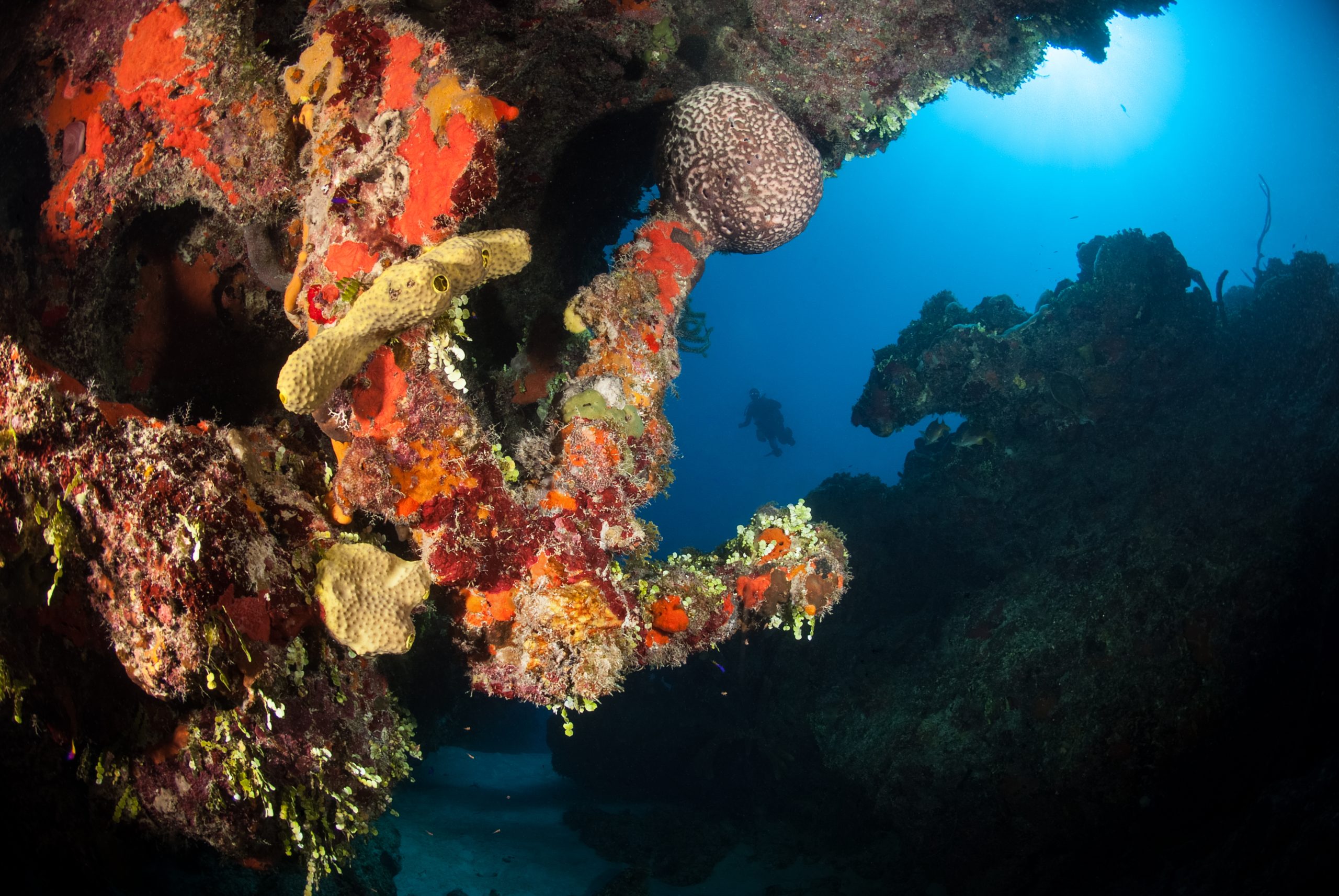
Gullies – One of West Caicos’ signature dives, Gullies features dramatic cuts through the reef that create natural swim-throughs and shelter colorful reef life. Large elephant ear sponges, black coral, and vibrant gorgonians decorate the walls while turtles, Nassau grouper, and schools of reef fish are frequent companions throughout the dive.
The Anchor (Whiteface) – A guest favorite for decades and named after the island’s striking white limestone cliffs, this site features beautiful swim-throughs, an historic anchor wedged into the reef wall, colorful coral formations, and frequent shark sightings.
Elephant Ear Canyon – As its name suggests, Elephant Ear Canyon is known for its enormous elephant ear sponges, some of the largest in the Turks & Caicos. Sand chutes weave between sponge-covered reef formations while stingrays, garden eels, and reef fish patrol the reef top before the wall plunges into the deep blue.
French Cay Dive Sites
French Cay is the itinerary’s remote, big-water chapter, where nutrient-rich currents increase the chance of larger pelagic life. The walls here feel wilder and more exposed, adding a distinct contrast to Northwest Point and West Caicos.
Double D – Often described as one of French Cay’s signature dives, Double D features two impressive pinnacles rising from the reef like underwater towers. The surrounding structure attracts schooling jacks, grouper, spotted eagle rays, and abundant Caribbean reef life, making it one of the most photogenic dives in the region.
G-Spot – G-Spot begins innocently enough before the reef suddenly opens into a dramatic V-shaped wall that disappears into the deep blue. With the reef on one side and open ocean on the other, it’s one of French Cay’s most spectacular wall dives.
Rock & Roll – Rock & Roll captures the pace and energy of French Cay, with cruising reef sharks, active fish life, and textured reef structure. It is also a favorite afternoon or night dive when conditions allow.
Half Mile Reef – Stretching along French Cay’s edge, Half Mile Reef balances broad underwater scenery with chances to see barracuda, snapper, sea fans, and larger marine life, while its sheltered bowl can offer calmer conditions than nearby walls.
Frequently Asked Questions About Turks & Caicos Diving
Why is Turks & Caicos one of the Caribbean’s best liveaboard diving destinations?
The Turks & Caicos Islands are known for clear visibility, steep wall systems, healthy reefs, and reliable marine life encounters. A liveaboard adds value by linking multiple regions, including Northwest Point, West Caicos, and French Cay, in a single itinerary.
What marine life can you see while diving in Turks & Caicos?
Divers regularly encounter Caribbean reef sharks, spotted eagle rays, sea turtles, Nassau grouper, jacks, barracuda, southern stingrays, and large schools of tropical reef fish. Seasonal sightings may also include hammerhead sharks, blacktip sharks, dolphins, and manta rays.
What are the most famous dive sites in Turks & Caicos?
Some of the region’s best-known dive sites include Shark Hotel, Amphitheater, The Crack, Hole in the Wall, The Dome, Eel Garden, Driveway, Gullies, Whiteface (The Anchor), Elephant Ear Canyon, Double D, G-Spot, Rock & Roll, and Half Mile Reef. Each offers unique wall formations, marine life, sponges, swim-throughs and underwater scenery.
What makes wall diving in Turks & Caicos unique?
The islands sit on the edge of vast underwater plateaus where coral reefs suddenly drop thousands of feet into the Atlantic Ocean. These dramatic walls are covered with giant barrel sponges, black coral, sea fans, elephant ear sponges, and healthy soft corals, creating some of the Caribbean’s most spectacular underwater landscapes.
Is Turks & Caicos good for underwater photography?
Yes. Excellent visibility, dramatic underwater scenery, and abundant marine life make the Turks & Caicos one of the Caribbean’s premier underwater photography destinations. Wide-angle photographers enjoy the sponge-covered walls and shark encounters, while macro photographers can find colorful reef fish, juvenile marine life, nudibranchs, and other smaller subjects throughout the reefs.
