
 Expertise Since 1987
 Rated Excellent
 FLEXIBLE PRICING
Real conditions, recent sightings and what divers can expect across the fleet right now.
If you have a dive trip coming up, you may have questions about El Niño. We’ve been hearing them from guests across the fleet. Will it affect my trip? What does it mean for the reefs and marine life? Will I see the sharks, mantas and other animals I’m travelling for?
They’re fair questions, particularly this year. As of September 2026, El Niño conditions are present in the equatorial Pacific. El Niño can affect water temperatures, currents, weather and marine ecosystems, but those effects are not the same everywhere.
For guests across the Explorer Ventures Fleet, location matters. Galápagos, Indonesia, Palau, the Maldives, the Red Sea and Caribbean are influenced by different ocean systems, seasons and local conditions. A change in one part of the world doesn’t tell us what a diver will find somewhere else.
So we’re looking at the available science, following regional monitoring and, most importantly, checking in with the crews, guides and guests who are diving these destinations now.
There is plenty of good news to share.
Galápagos has unusually warm water, which means calm seas and excellent visibility. In Egypt, multiple whale sharks have been reported around Hurghada (Red Sea) this month. Across the destinations, there are sharks, mantas, turtles, schooling fish, walls, reefs, wrecks and all the smaller finds that make a week of diving worth travelling for.
Here’s what we know so far.
Jump to Destination
What Does El Niño Mean for Diving?
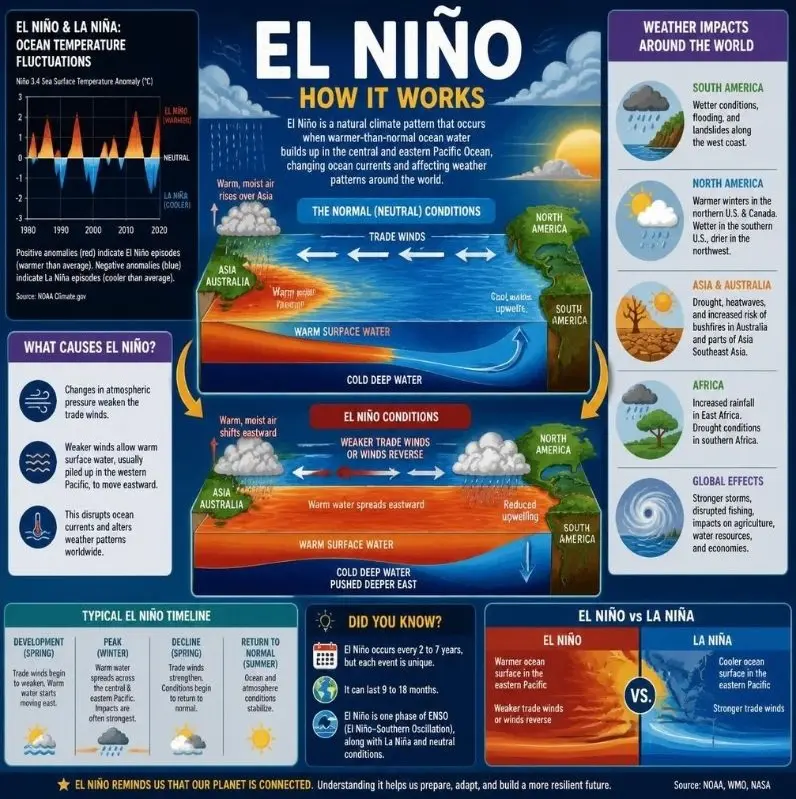
El Niño is part of a natural climate pattern called the El Niño-Southern Oscillation, or ENSO. During an El Niño event, warmer-than-usual surface waters develop across parts of the central and eastern tropical Pacific and interact with the atmosphere.
For divers, that can show up as changes in water temperature, currents and visibility. Marine life may respond as food and water conditions shift, while prolonged periods of unusually warm water can put additional stress on coral reefs.
None of that translates neatly into “good diving” or “bad diving.” Moving water is part of what makes many of the world’s best dive destinations so productive. Currents carry nutrients, marine life follows food, and conditions can change from one site or day to the next.
For an upcoming trip, the useful question is much simpler: what’s happening where you’re going?
Galápagos: Clearer Visibility and a Changing Ocean
Galápagos is where we’re getting the most questions about El Niño. The islands sit in the eastern tropical Pacific, where several major ocean currents meet, so the effects can be more noticeable here. Research published by the Charles Darwin Foundation in 2026 found strong seasonal differences in predatory fish biomass around Darwin and Wolf, including scalloped hammerheads.
This season is behaving differently. Hammerheads are still present and wowing divers weekly, but they are generally deeper, with recent encounters more prolific at Wolf than Darwin. Sea lions and dolphins are being seen in usual or above average numbers. On the plus side for divers seas are calmer and visibility has been excellent.
“We had an amazing trip! Although the water was a lot warmer than expected, we still got an amazing array of wildlife. The boat and the staff were exceptional, and 100% made the trip. The food was outstanding, dive guides fantastic, and the crew, you couldn’t ask for more. The boat was modern, with nothing needing to be fixed. Watching dolphins from the shower most day was fantastic!”
— Name withheld, verified Tiburon Explorer guest, September 2026
PADI Master Scuba Diver Trainer Victor Chan, who is currently guiding on Tiburon Explorer in Galápagos, describes the conditions this way:
“Normally at this time of year, the water is cold around most of the islands. With El Niño, the water is very warm. There is little or no current, the sea is calm and visibility is much better. It has made the diving conditions more comfortable for our guests.”
— Victor Chan, PADI MSDT and Galápagos dive guide, September 2026, Translated from Spanish
Guests coming off the vessels are reporting those warmer conditions too. Reef N Beef Photography recently returned from a Humboldt Explorer trip, where the water reached 84° F (29°C). While they didn’t encounter whale sharks during their trip, their overall take on the diving was overwhelmingly positive:
“The water was a positively toasty 29°C, but that didn’t stop the Galápagos from showing up and delivering some absolutely epic diving! No whale sharks for us this season, but honestly, it didn’t take away from the experience. The wildlife, the scenery and the sheer amount of life in the water made this one hell of a dive trip. The Galápagos never really needs to try too hard to impress.”
— Reef N Beef Photography, Humboldt Explorer guest, September 2026
Indonesia: One Country, Many Ocean Conditions
Indonesia stretches across a huge area between the Pacific and Indian oceans. Water moves through thousands of islands, with local currents, monsoons and geography shaping the diving from one region to another. Raja Ampat, Komodo and the other areas visited by Blue Manta Explorer and White Manta Explorer can each have their own conditions, even within the same broader climate pattern.
Raja Ampat sits within the Coral Triangle and supports extraordinary marine biodiversity alongside an extensive network of marine protected areas. Recent research has documented signs of coral recovery following bleaching at a Raja Ampat study site, although recovery varied between coral groups. Continued protection and reef monitoring are particularly important in a region with so much marine life concentrated underwater.
Unlike the warming seen in the eastern Pacific, El Niño can bring cooler water to parts of Indonesia. In September, cruise leaders reported deeper water temperatures occasionally dropping to around 70°F (21°C), with noticeable thermoclines on some dives. Those cooler waters can be found at depth where divers are also looking for larger pelagic species.
One exciting change this season has been particularly strong hammerhead sightings, with cruise leaders reporting high numbers on many trips.
Palau: Currents, Reefs and Big Marine Life
Palau sits in the western Pacific, where currents are already a defining part of the diving. They help support the reefs and the big marine life people travel here for: sharks, schooling fish, mantas and turtles. Tides and water movement can make one dive very different from the next, which has always been part of diving Palau from Black Pearl Explorer.
El Niño can bring cooler sea temperatures and less rainfall to Palau, often resulting in exceptionally clear water. Cooler, nutrient-rich water can also rise along Palau’s steep walls, supporting the food chain and the action at current-heavy sites. At places like Blue Corner, that can mean large schools of gray reef sharks, barracuda and jacks gathering in the moving water.
Marine conservation has deep roots here too. Palau has extensive protections for its waters, including the Palau National Marine Sanctuary and protected areas closer to shore. For divers, it means spending a week in one of the Pacific’s most celebrated marine environments, while diving carefully and giving the wildlife and reefs the space they need.
Maldives: Currents Are Part of the Experience
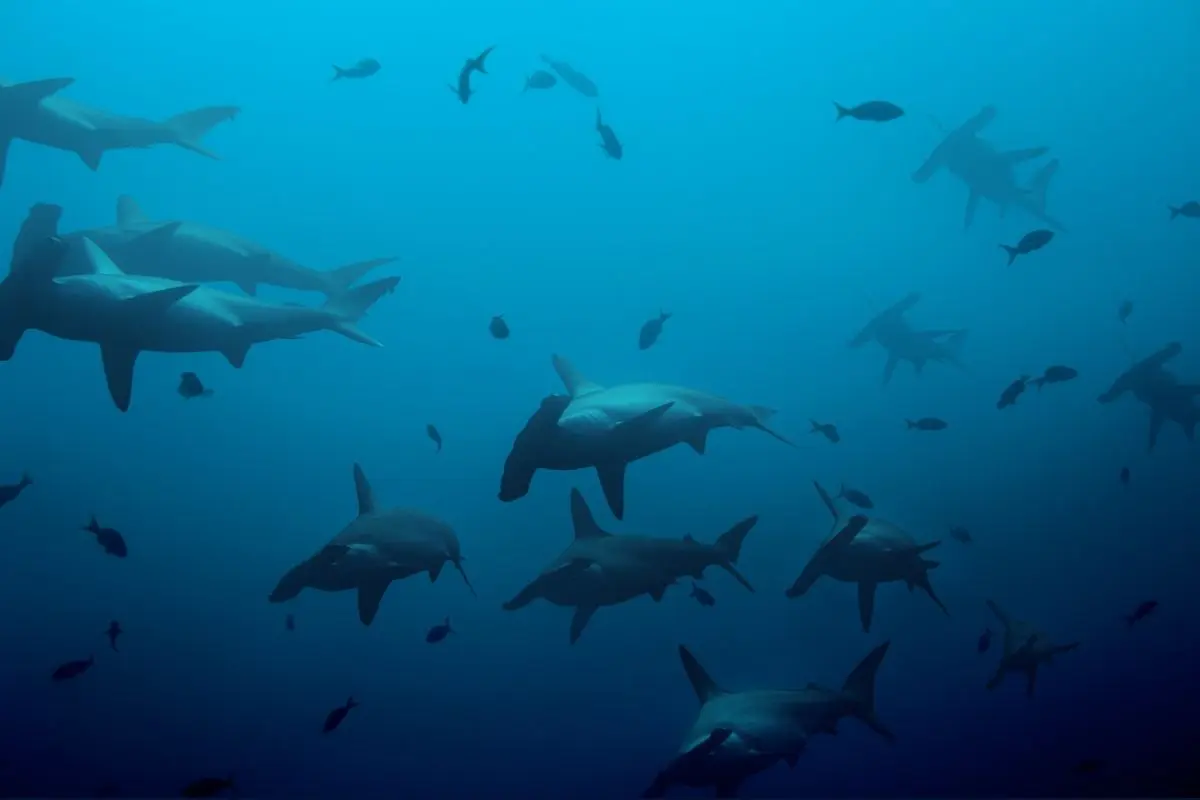
Anyone who has dived the Maldives knows how much the flow of water matters here. Seasonal monsoons move water through the atolls and channels, bringing nutrients that support mantas at feeding and cleaning areas, sharks in the channels, whale sharks and huge schools of fish. Strong, regular currents are part of the experience, and often part of the reason there is so much to see.
In the Maldives, El Niño can have a less direct effect, influencing conditions across the Indian Ocean rather than following the same pattern seen in the Pacific. The Maldives Meteorological Service reports above-normal atmospheric and sea surface temperatures. Visibility on the outer reefs remains generally good at around 20 to 30 metres, while plankton blooms around inner lagoons and thilas can make conditions more variable. Changes in currents and plankton can also shift where pelagic life is feeding and moving, adding a little more unpredictability to what divers may encounter. Overall, the marine life guests come to the Maldives for continues to be seen, including mantas, sharks, whale sharks and large schools of fish.
Recent Emperor Explorer II guest Daniel H. saw firsthand how the dive team worked with changing conditions:
“Sea conditions and current impacted a couple of dive sites but were addressed by moving to alternate sites. Dive briefings were very good and provided target species expected.” — Daniel H, verified Emperor Explorer II guest, August 2026
Red Sea: Warm Water and Big Encounters
The Red Sea is far removed from the eastern tropical Pacific and has its own circulation, seasons and marine environment. One of the more exciting reports this September came from Egypt’s Red Sea Reserves Authority, which reported multiple whale shark sightings around Giftun Island near Hurghada, including two seen together. It’s a pretty good example of why a temperature map can’t tell you everything about a dive trip.
For the Red Sea, Egypt has increased work around reef protection, biodiversity monitoring and marine conservation as ocean temperatures rise. Those efforts sit alongside what divers continue to travel here for: clear blue water, steep walls, reefs, wrecks and encounters with large marine life. Grand Sea Explorer and Glory Sea Explorer take divers farther into that environment, where responsible diving practices are an important part of keeping contact and other local pressures to a minimum.
Caribbean: Sharks, Walls and Plenty to Look For
The Caribbean brings another kind of diving altogether. In the Turks & Caicos, divers can expect Caribbean reef sharks, turtles, stingrays, jacks, eels, lobsters and crabs, along with soft corals, sponges and big blue-water walls. Saba and St. Kitts change the scenery again, from Saba’s volcanic pinnacles and walls to wrecks, macro life and the varied sites around St. Kitts.
El Niño affects the Caribbean differently from destinations in the Pacific. Research from the University of the West Indies and Caribbean Institute for Meteorology and Hydrology has linked El Niño years with drier conditions across the region and, typically, fewer hurricanes due to stronger upper-level winds. Ocean temperatures and local weather patterns also play a role, so what divers experience can vary considerably across the Caribbean.
For us, the bigger story is what’s happening underwater now, where sharks, turtles, rays and abundant fish life continue to be part of the diving.
Throughout the Caribbean, however reefs have faced significant pressure from warm water and coral disease in recent years, and it’s important not to gloss over that. If anything, it makes reducing the pressures we can control even more important. Turks & Caicos Explorer II and Caribbean Explorer II have been working through Green Fins assessments and action plans alongside Dive Green®, with attention to diver practices, reef contact, waste and other day-to-day impacts that can be reduced.
Crew commitment can make all the difference in guests’ dive experience:
“Top Notch Dive Guides — showed us the best of the reefs/wrecks. Very knowledgeable and Professional. Awesome in depth Dive Briefs. If you have something specific you want to see on the reefs they will find it for you.”
— John K., Caribbean Explorer II guest, July 2026
What Can a Dive Operator Actually Do About El Niño?
Of course, we can’t control El Niño any more than we can change the temperature of an ocean from the back deck of a liveaboard. Daily decisions that have real world impacts on reefs and the broader environment are in the hands of operators. That is at the heart of the work Explorer Ventures Fleet has been doing through Dive Green® and, more recently, Green Fins with The Reef World Foundation.
The Reef-World Foundation looked at this issue in August in an article about El Niño and the role dive operators can play in reducing other pressures on marine ecosystems. Explorer Ventures was featured in the piece, with founder Clay McCardell explaining what the Green Fins framework has added:
“We’ve always approached operations with sustainability in mind. What Green Fins brought was structure, documentation, and a transferable framework that helped vessel management strengthen those efforts and apply them more consistently across the fleet.”
— Clay McCardell, Explorer Ventures Fleet
An operator can’t stop an ocean heatwave, but there are local pressures that can be reduced. That includes how divers are briefed, contact with reefs, wildlife interactions, waste and single-use plastics, and how sensitive marine environments are approached. Green Fins assessments give participating vessels specific action plans rather than treating sustainability as something that is ever “finished.”
Guests are part of that work too. Good buoyancy, keeping fins and equipment off the reef, giving wildlife space and following local marine park rules are simple ways to leave less of an impact behind.
Diving in a Changing Ocean
Explorer Ventures Fleet has been taking divers around the world since 1987. The crews have seen warm years, cool years, unusual seasons and plenty of surprises underwater. Science and monitoring help us understand the larger changes. Years of diving these destinations add something else: knowing that no two weeks underwater are ever exactly alike.
That unpredictability is part of why we dive. A reef shark appearing over the wall in Turks & Caicos. A hammerhead coming out of the blue at Wolf. Drifting through schools of fish in Palau. A manta passing overhead in the Maldives. Finding something tiny tucked into an Indonesian reef that you almost swam past.
Those are the moments people travel for, and they’re happening in these destinations now.
The Takeaway: Should El Niño Change Your Dive Plans?
El Niño on its own isn’t a reason to cancel a dive trip.
If you have a trip booked or you’re thinking about one, look at the destination, the time of year and what is happening there now. Conditions in Galápagos don’t tell us what the diving will be like in Indonesia, Palau, the Maldives, the Red Sea or Caribbean.
Wildlife is never guaranteed, with or without an El Niño year. That unpredictability has always been part of diving in wild places. You can return to the same site, in the same season, and have a completely different dive. Sometimes the encounter you travelled halfway around the world for happens. Sometimes something entirely unexpected steals the show.
Right now, Galápagos has calm seas, excellent visibility and plenty of marine life. Indonesia is seeing cooler water and strong hammerhead encounters, while Palau’s cooler, nutrient-rich waters are supporting the shark and schooling-fish action the destination is known for. In the Maldives, currents continue to bring the mantas, sharks, whale sharks and schooling fish divers travel for. Across the Red Sea and Caribbean, there are sharks, turtles, rays, walls, wrecks and plenty of reef life to discover.
The bottom line? There is a lot of great diving happening across the fleet right now. El Nino is part of the picture, but it isn’t the whole picture – and what’s happening in the water is far more useful than making assumptions based on the forecast alone.
If you have questions about an upcoming trip, talk to the reservations team. We’ll keep following the conditions and sharing what the crews are seeing so you can arrive informed, prepared and excited to get in the water.
We’ll see you underwater.
